
Introduction to AIOps
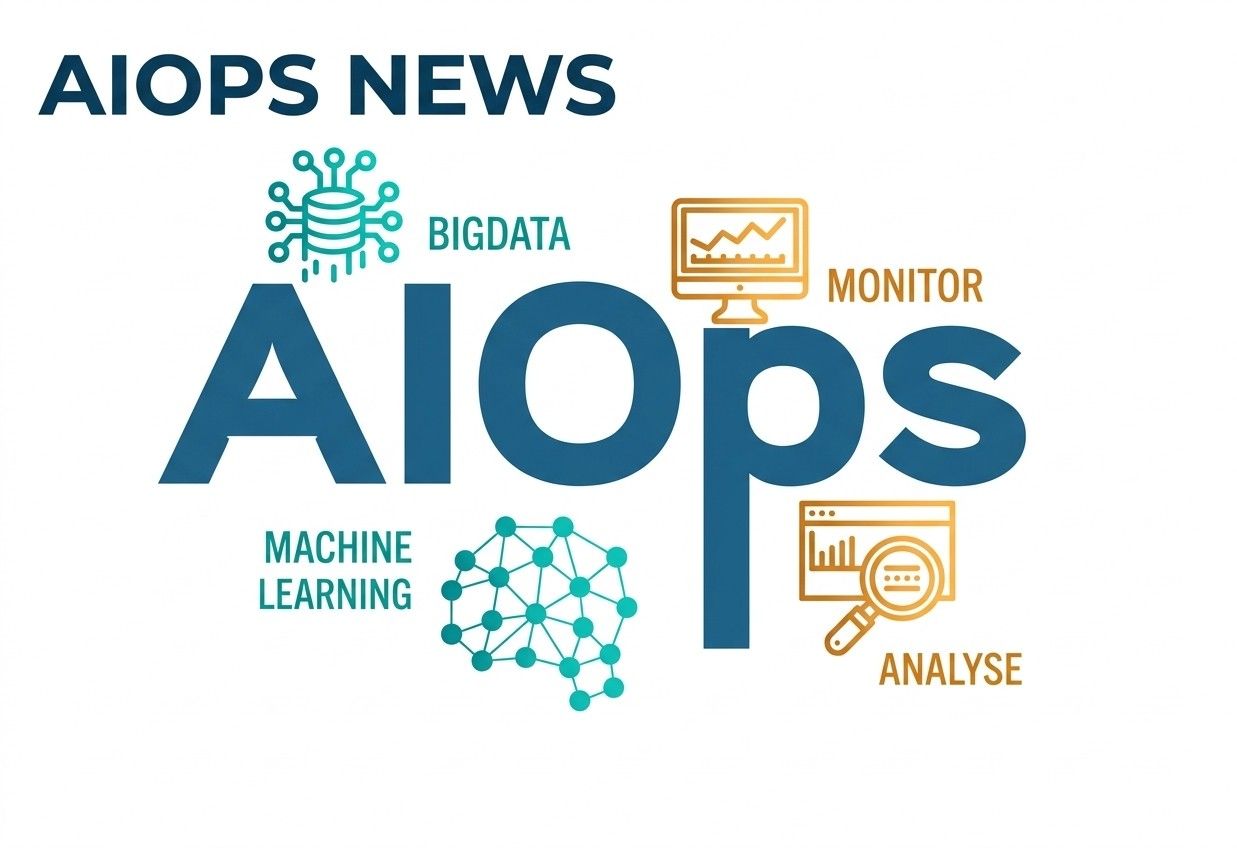
When evaluating AIOps latest, it’s important to understand the key differences. The pace of IT operations has outrun human capacity to manage it alone. AIOps—Artificial Intelligence for IT Operations—bridges that gap by combining machine learning, big data analytics, and automation to help organizations detect, diagnose, and resolve infrastructure issues faster than ever before.
Staying current with AIOps latest matters because the field is evolving rapidly, reshaping how enterprises think about network observability, incident response, and operational intelligence. The trends emerging today will define IT resilience tomorrow.
Major Trends in AIOps
The latest AIOps updates reflect a field moving fast in several clear directions. Hyperautomation is leading the charge—organizations are pushing beyond alert correlation to fully automated remediation, reducing mean time to resolution without human intervention. Alongside that, predictive analytics is maturing from novelty to necessity, with teams expecting systems to anticipate failures rather than simply react to them.
Observability has also taken center stage. As Netscout notes, poor network visibility carries significant hidden costs—making intelligent, AI-driven monitoring more critical than ever. These converging trends are quietly reshaping what IT operations teams can realistically accomplish—and what they’ll be expected to deliver next.
Impact of AIOps on IT Operations
The latest AIOps developments aren’t just theoretical—they’re reshaping how IT teams operate day to day. Poor network observability alone carries significant hidden costs, from delayed incident response to cascading failures that affect end users. AIOps directly addresses these pain points by reducing mean time to resolution and shifting teams from reactive firefighting to proactive management.
Faster detection, smarter triage, and fewer human errors are the clearest wins organizations are reporting. What typically happens is that noise reduction alone frees analysts to focus on what actually matters—genuine threats and performance degradation—rather than chasing false positives.
AIOps doesn’t replace IT expertise; it amplifies it, giving skilled engineers the clarity to act decisively under pressure.
These operational gains are laying the groundwork for something even more transformative on the horizon.
Future of AIOps and IT Operations
Emerging AIOps developments point toward a future where IT operations become increasingly predictive rather than reactive. Organizations are moving beyond simply automating responses to outages—they’re investing in systems that anticipate infrastructure failures before users ever notice a disruption.
One practical pattern is the growing integration of AI with network modernization frameworks. Strategic partnerships like the one between NetBox Labs and AHEAD signal that AI readiness is now baked into enterprise infrastructure planning from the ground up—not bolted on as an afterthought.
Autonomous Workforce impact and tighter feedback loops between observability data and decision-making engines will define the next wave. Understanding how these capabilities compare—and sometimes overlap—with DevOps practices will be key to getting the most value from both.
AIOps vs. DevOps: A Comparative Analysis
While the previous sections explored how recent AIOps developments are shaping IT operations, it’s worth clarifying how AIOps relates to—and differs from—DevOps. These aren’t competing philosophies; they’re complementary disciplines.
DevOps focuses on collaboration between development and operations teams to accelerate software delivery. AIOps, by contrast, applies machine learning to manage and optimize the operational environment itself. In practice, AIOps acts as an intelligent layer that enhances DevOps workflows rather than replacing them.
Think of DevOps as the methodology and AIOps as the cognitive engine that makes it smarter—a distinction that’s often misunderstood.
Common Misconceptions About AIOps
Staying current with AIOps latest and updates 2026 helps cut through the noise—because misconceptions about AIOps are surprisingly widespread. The biggest myth? That AIOps fully replaces human IT teams. In practice, AIOps augments human decision-making rather than eliminating it. IT professionals shift toward higher-value strategic work while automated systems handle routine pattern detection and alert correlation. AIOps empowers teams; it doesn’t replace them. Understanding this distinction is what separates organizations that adopt it successfully from those that stall before they start—a pattern real-world implementations consistently reinforce.
Case Studies: Real-World Applications of AIOps
Abstract concepts only go so far—real adoption stories are where AIOps latest prove their value. Microsoft’s AI transformation blog highlights over 1,000 documented customer success stories, spanning industries from retail to healthcare. A common pattern is enterprises using AIOps to reduce mean-time-to-resolution for critical incidents—sometimes cutting response times by half. Intelligent automation handles alert correlation and root-cause analysis, freeing teams for strategic priorities. These outcomes are compelling, but they also raise an important question: what stops every organization from achieving similar results? That’s exactly where limitations deserve a closer look.
Limitations and Considerations
AI for IT operations news isn’t a silver bullet—and recognizing its boundaries is just as important as celebrating its wins. Data quality remains a persistent challenge: AI models are only as reliable as the infrastructure data feeding them. Poorly labeled alerts, inconsistent monitoring coverage, or siloed datasets can undermine even the most sophisticated platform.
Organizational readiness also matters. Teams without foundational observability practices often struggle to extract meaningful value. There’s also the reality of model drift—AI systems require ongoing tuning as environments evolve.
The most successful implementations treat AIOps as a continuous practice, not a one-time deployment. With those realities in mind, understanding the core principles driving successful adoption becomes essential.
Key Takeaways
The landscape covered so far—from real-world deployments to persistent limitations—points to a clear truth: AIOps latest are reshaping IT operations in meaningful, measurable ways. AIOps updates is accelerating that shift, enabling teams to move from reactive firefighting to proactive intelligence. Poor observability carries real financial consequences, as Netscout highlights. Adopting AIOps thoughtfully, with clean data and clear governance, remains the defining factor between success and stagnation—and the field is only evolving faster from here.
What is the Future of AIOps?
AIOps developments is evolving fast—moving beyond reactive alerting toward genuinely predictive, autonomous operations. The trajectory points to tighter integration with cloud-native environments, edge computing, and increasingly capable generative AI models that can reason across complex, multi-domain infrastructure.
Autonomous Workforce impact is the most anticipated milestone: systems that don’t just flag anomalies but resolve them without human intervention. In practice, this means IT teams shifting from firefighting to oversight—a fundamental change in how operations roles are defined.
The future of AIOps isn’t replacing IT professionals—it’s amplifying their capacity to focus on strategic work while automation handles the noise.
As platforms mature, expect richer AIOps developments capabilities, cross-team collaboration features, and deeper compliance automation to become standard. The latest developments in this space are already reshaping vendor roadmaps and enterprise priorities—more on that next.
Latest AIOps News: IT Operations Updates
Staying current on the latest AIOps latest is practically a job in itself—the space moves quickly, and meaningful developments happen across platforms, partnerships, and research simultaneously. Reliable sources like AI and Big Data publications and curated AI newsletters help IT leaders filter signal from noise.
Keeping pace with recent AIOps developments isn’t optional—it’s a core competency for modern IT operations teams. As the field continues accelerating toward greater autonomy and intelligence, staying informed today shapes better decisions tomorrow.
What Is the Future of AIOps?
Recent AIOps developments point toward one clear direction: systems that don’t just detect problems but prevent them autonomously. The shift from reactive to predictive operations is accelerating, driven by advances in large language models and real-time infrastructure intelligence.
In practice, the next wave means tighter human-machine collaboration—not replacement. Autonomous Workforce impact, multi-cloud orchestration, and natural language interfaces are becoming standard expectations rather than differentiators.
That evolution naturally raises a harder question: which human roles actually survive it?
Which 3 Jobs Will Survive AI?
As the future of AIOps reshapes IT operations, a natural question emerges: which human roles actually hold their ground?
Three roles consistently prove resilient:
- Strategic architects who define why systems should be built, not just how
- Ethics and oversight specialists who govern AI decision-making
- Creative problem-solvers who handle novel, ambiguous challenges automation can’t categorize
Automation replaces repetitive tasks—it doesn’t replace judgment. Roles requiring contextual reasoning, accountability, and human trust remain stubbornly difficult to automate away. That tension between human and machine responsibility leads directly to a bigger question worth examining next.
Is AIOps Replacing DevOps?
Short answer: no. AIOps and DevOps are converging, not competing. Think of AIOps as the intelligent layer that makes DevOps pipelines smarter — automating incident detection while DevOps teams focus on building and shipping.
The real conversation around Autonomous Workforce impact isn’t about elimination. It’s about augmentation. DevOps engineers gain faster feedback loops and reduced alert noise, freeing them for higher-value architectural decisions.
Understanding how much of that workload AI absorbs, though, leads to an important metric worth examining next.
What Is the 30% Rule in AI?
The 30% rule is a practical guideline suggesting that AI should handle roughly 30% of any given workflow — enough to meaningfully reduce human burden without removing human judgment from critical decisions. With so many organizations asking whether enterprise replacing with AI is happening too fast or too slowly, this benchmark offers a useful reality check.
In practice, the 30% threshold balances efficiency gains against risk. Automation that exceeds this share too quickly often outpaces a team’s ability to monitor, validate, and course-correct — a pattern frequently observed in early AIOps rollouts.
This rule isn’t formal doctrine, but it reflects a measured adoption philosophy that aligns with how real transformation unfolds — gradually, then all at once.
Has Autonomous Workforce Changed Anything for You Yet?
The honest answer for most organizations? Partially. Autonomous workforce capabilities — AI agents handling tickets, provisioning resources, and triaging alerts without human prompting — are real, but adoption is uneven. Who are the major AIOps market players reshaping this space? Vendors across cloud, networking, and observability are all staking claims.
In practice, early adopters report meaningful gains in alert handling and routine task automation. However, full autonomy remains aspirational for most enterprises — which raises an important question about what happens when organizations push too far, too fast.
What Could Possibly Go Wrong If an Enterprise Replaces All Human IT Staff With AI?
Almost everything, honestly. The AI role in cybersecurity alone illustrates the risk: AI systems can detect known threat patterns at scale, but novel, context-dependent attacks often require human judgment that no model can fully replicate yet.
Beyond security gaps, enterprises lose institutional knowledge, the informal understanding of why systems are configured the way they are. Automated agents don’t ask “why” — they execute. That distinction matters enormously when troubleshooting cascading failures.
A common pattern is over-automation creating brittle systems that perform flawlessly in normal conditions but collapse under edge cases no training data anticipated. Understanding which players are building safeguards against exactly these failure modes matters — and that’s precisely what the AIOps market landscape reveals.
Who Are the Major Players Dominating the AIOps Market?
The AIOps market isn’t controlled by a handful of startups — it’s a competitive arena where established technology giants and specialized innovators are racing to define the next standard. Advancements in AI have accelerated this competition dramatically, pushing every major vendor to deepen their observability, automation, and predictive analytics capabilities.
A common pattern is that cloud hyperscalers hold structural advantages: they own the infrastructure and the intelligence layer simultaneously. Meanwhile, specialized vendors compete on depth rather than breadth.
What’s clear is that no single vendor owns the entire AIOps story — the market rewards organizations that evaluate fit over brand recognition. Those cybersecurity implications, however, deserve their own lens entirely.
What Role Does AI Play in Improving Cybersecurity for Digital Infrastructure?
As AIOps latest and updates 2026 continues to spotlight AI’s expanding capabilities, cybersecurity remains one of its most critical applications. AI-powered systems analyze network behavior in real time, flagging anomalies before they escalate into breaches. Threat detection that once required human analysts working overnight now runs continuously, at machine speed. The practical upside is significant — faster response times, reduced alert fatigue, and smarter prioritization of genuine risks over false positives. That momentum is pushing organizations to rethink how AI and security work together.
What Are the Latest Advancements in Artificial Intelligence Shaping AIOps?
The pace of AI innovation feeding into AIOps shows no signs of slowing. Generative AI, autonomous remediation, and multi-modal observability are among the most consequential recent developments — moving AIOps from reactive alerting toward genuinely self-healing infrastructure. Staying current matters: resources like AI and Automation in News Production and INMA’s coverage underscore how rapidly AI capabilities are reshaping entire industries. These advances set the stage for an exciting next chapter in AIOps evolution.
What Is the Future of AIOps?
The trajectory is clear: AIOps is moving from reactive monitoring to truly predictive, autonomous IT operations. What’s emerging is a future where AI doesn’t just flag problems — it anticipates, prevents, and resolves them before human teams even notice. Tighter integration between network observability, AI-driven remediation, and infrastructure automation will define the next generation of IT operations. The teams and organizations that invest now in AI-ready infrastructure will be best positioned as this evolution accelerates.
The AIOps Journey: Where It All Comes Together
AIOps isn’t a destination — it’s an ongoing evolution. From AI-driven anomaly detection and autonomous remediation to generative AI and predictive operations, the technology is fundamentally reshaping how IT teams work.
The bottom line: organizations that embrace AIOps today are building the resilient, intelligent infrastructure tomorrow demands.
Key Takeaways
- Proactive beats reactive — AIOps shifts IT from firefighting to prevention
- Automation reduces noise — freeing teams for high-value strategic work
- Continuous learning matters as environments grow more complex
Stay current with trusted sources like AI newsletters and industry publications to track emerging developments. The smartest move? Start small, measure impact, and scale what works.

10 Comments
I am truly thankful to the owner of this web site who has shared this fantastic piece of writing at at this place.
Pingback: Latest AIOps News and Trends for IT Operations – Skyteck
I like the efforts you have put in this, regards for all the great content.
This is my first time pay a quick visit at here and i am really happy to read everthing at one place
Windows 11 users may need to boot into test signing mode for some driver based cheats.
https://shorturl.fm/6jKZD
webdesign agentur bamberg https://websiteerstellenlassenbamberg.de/
https://shorturl.fm/twYKj
https://shorturl.fm/Csg9A
https://shorturl.fm/spb0p