
Quick Answer
Your writing gets flagged as AI because detectors look for predictable patterns, not who wrote it. Clean, polished text with even sentences often matches what AI produces. This happens even with 100% human work. Add personal stories, vary sentence lengths, and edit in your own voice to fix it. Test with multiple tools and keep your natural style.
Introduction
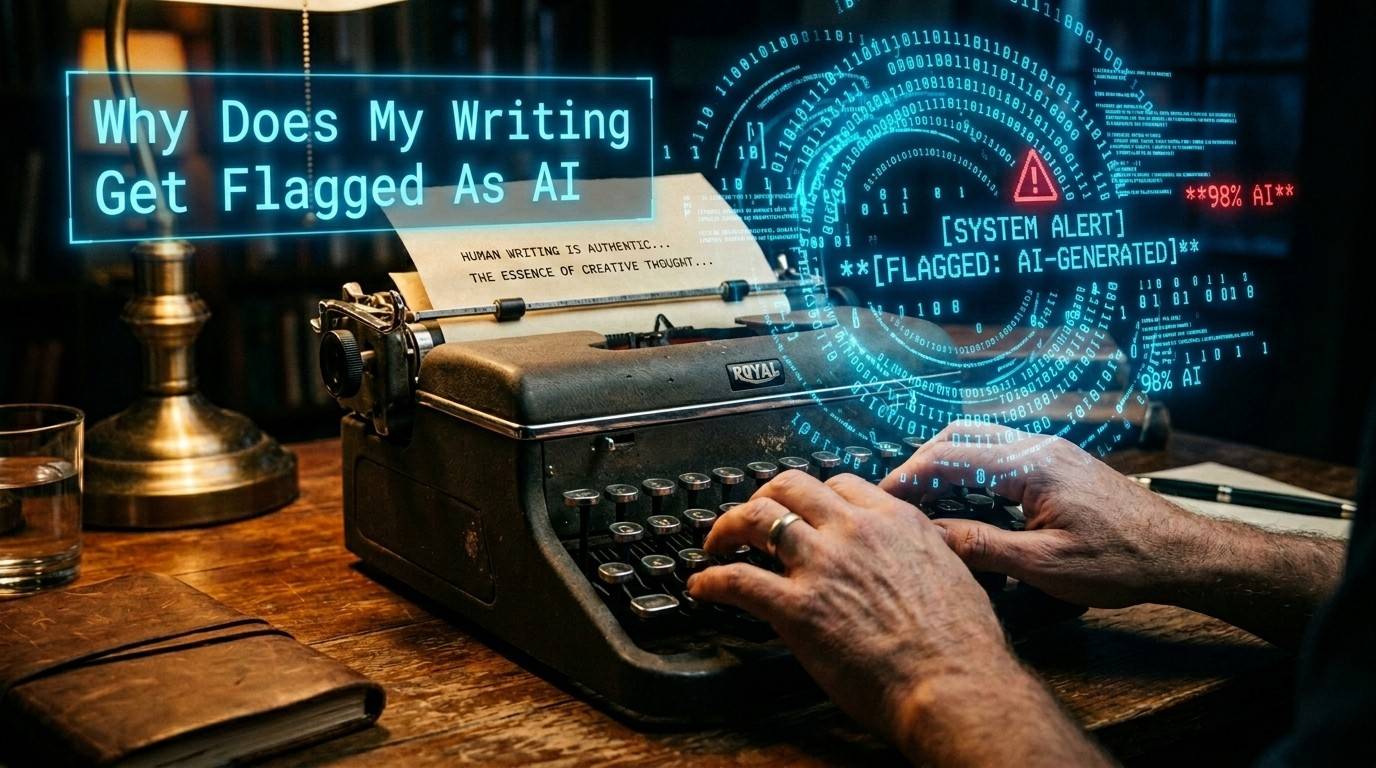
Why does my writing get flagged as AI when I wrote every word myself? Detectors flag human text because they spot patterns like perfect structure and even flow that match AI output. This issue affects students, writers, and professionals every day. It leads to unfair accusations in school or work.
The good news is you can understand why it happens and fix it. This guide explains the main causes and gives clear steps to make your writing sound human again.
How AI Detectors Work
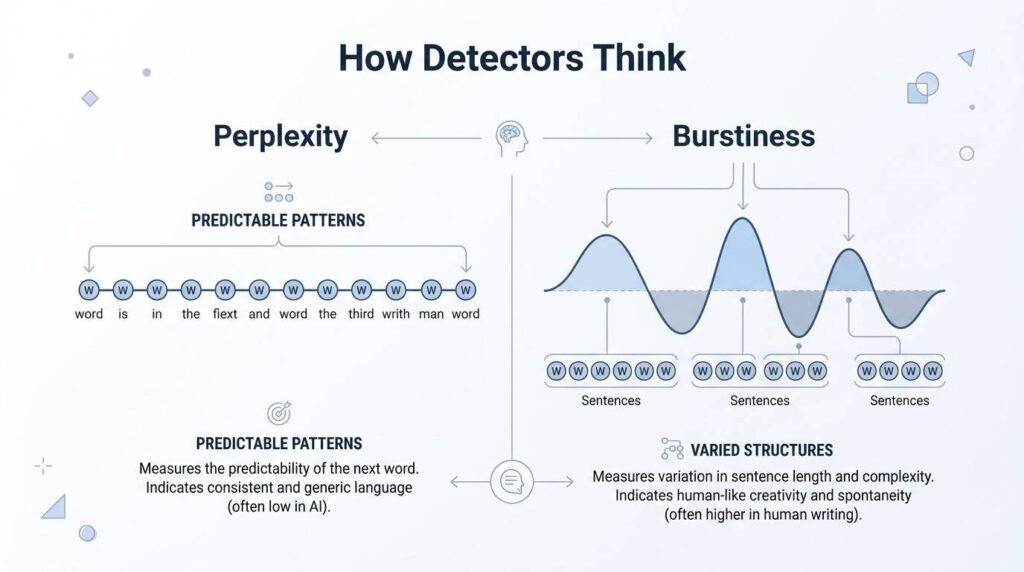
AI detectors do not read text like people do. They check statistical patterns instead. Two key ideas are perplexity and burstiness.
Perplexity measures how predictable the words are. AI text usually has low perplexity because it picks common next words. Human writing often surprises the model more.
Burstiness looks at variation in sentence length and style. AI text tends to stay even. Humans mix short, punchy sentences with longer ones. Low burstiness can trigger a flag.
Detectors compare your text to patterns learned from huge amounts of AI and human examples. They give a confidence score or percentage. But these tools make mistakes, especially with good, clean human writing.
Common Reasons Human Writing Gets Flagged
Several habits make human writing look like AI output to detectors.
- Overly polished and error-free text. Perfect grammar and no typos can seem too clean.
- Uniform sentence lengths. Most sentences stay about the same length with little variation.
- Formulaic structure. A clear introduction, body, and conclusion with standard transitions like “therefore” or “in addition.”
- Formal tone without personality. Text that feels flat or generic lacks personal voice or emotion.
- Repetitive patterns. Overuse of similar phrases or predictable vocabulary.
- Heavy editing with tools. Grammar checkers like Grammarly can smooth out natural quirks.
- AI-like words. Phrases such as “crucial,” “explore,” or “in today’s world” appear often in AI text.
These issues show up a lot in academic essays and professional reports.
Example: A student writes a clear, logical essay on climate change. The structure is strong, and sentences flow well. Detectors flag it at 80% AI even though the student wrote it by hand.
Who Gets Affected the Most?
Some groups see more false flags than others.
Non-native English speakers often use more formal or textbook language. This matches AI patterns closely. Studies show high false positive rates for ESL writers.
Students and academics face this in essays and assignments. Technical or scientific writing also triggers detectors because it needs precise terms.
Freelancers and job applicants run into problems when submitting polished work. Even strong human writers get flagged if their style is clear and organized.
Practical Ways to Fix and Avoid Flags
You can make your writing pass detectors without losing quality. Focus on sounding more human.
- Mix sentence lengths. Use some short sentences. Follow them with longer, detailed ones.
- Add personal touches. Include stories from your life or clear opinions.
- Use contractions. Words like “don’t” or “it’s” feel more natural.
- Include specific details. Real examples beat vague statements.
- Edit by hand. Read your work aloud and change sections that sound stiff.
- Break templates. Change your outline and avoid repeating the same transitions.
- Add slight imperfections on purpose. A thoughtful pause or rhetorical question can help.
Before and After Example
Before (flagged): “Climate change is a crucial issue. It affects many areas of life. Therefore, we must take action.”
After (humanized): “I remember the hot summer when our town flooded. Climate change hits hard in ways like that. We need real steps to fix it, not just talk.”
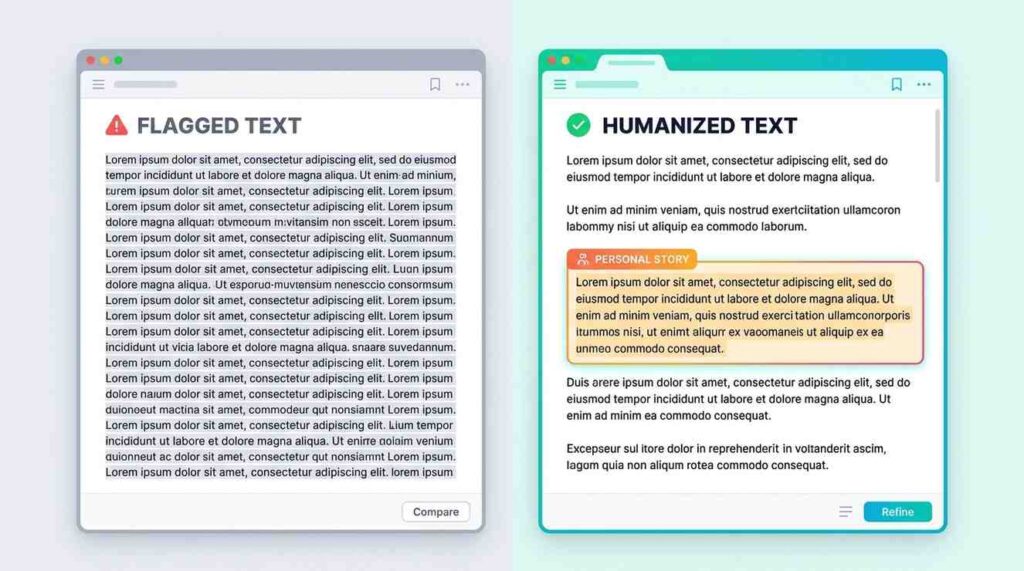
Try these changes and test your text again. Small edits often make a big difference.
See related guides on our site for more AI writing tips:
Tool Comparisons and Testing Tips
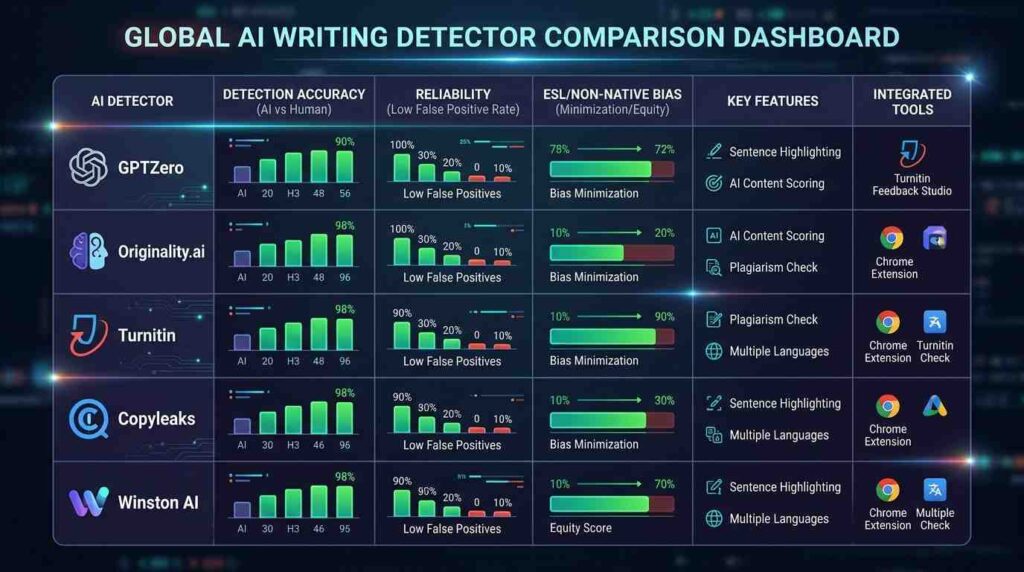
Popular detectors include GPTZero, Originality.ai, and Turnitin. Each gives slightly different results.
Turnitin claims low false positives (under 1% in many cases) but still flags some human work, especially shorter or ESL texts.
Test with 2 or 3 tools. Look at highlighted sections instead of just the score. Use the feedback to improve your style.
Keep records of your writing process. Draft versions, notes, or timestamps can prove your work is human if needed.
Platform-Specific Advice
Different places handle flags in their own ways.
Schools and Turnitin: Teachers should not rely on the score alone. Show your drafts and explain your process. Many schools now treat the tool as one piece of evidence.
Google and Publishing: Google wants helpful content with real experience (E-E-A-T). Focus on value instead of worrying about detectors.
Job Applications: Some companies use detectors. Keep your cover letters personal and specific to the role.
Document everything. Save notes, research, and early drafts.
Read more on responsible AI use here: AI Transformation and Governance.
Future of AI Detection
Detectors keep improving, but so do false positives in some cases. Newer tools try to reduce bias against non-native speakers. Watermarking in AI systems may become more common.
The best approach stays the same. Write with your own voice and real experiences. Detectors matter less when your content clearly helps readers.
In 2026 and beyond, focus on quality and personality. That will matter more than any score.
Explore fun AI topics like AI Optical Illusions to see creative sides of the technology.
FAQ Section
Q1. Why does Grammarly make my writing get flagged as AI?
Grammarly cleans text and removes natural variations. This can make writing more predictable. Use it lightly and add your own changes afterward.
Q2. Can Google detect AI content?
Google does not have a public AI detector for ranking. It focuses on helpful, original content. Strong E-E-A-T helps your pages rank well.
Q3. How accurate are AI detectors in 2026?
They improved but still make mistakes. False positives happen, especially with polished or ESL writing. No tool reaches 100% accuracy.
Q4. What should I do if my essay gets flagged?
Stay calm. Show your drafts and writing process. Revise with more personal voice and test again. Talk to your teacher if needed.
Q5. Do short sentences help avoid AI flags?
Yes. Mixing short and long sentences increases burstiness. This makes text feel more human.
Q6. Are non-native writers more likely to get flagged?
Yes. Formal language common in second-language writing often matches AI patterns. Adding personal examples helps.
Q7. Can I use AI tools and still pass detectors?
Use AI for ideas or outlines only. Rewrite everything in your own words and add personal details. Heavy reliance usually shows up.
Q8. How can I prove my writing is human?
Keep version history, notes, and research. Write about your real experiences. Multiple detector tests with low scores also help.
Conclusion
Why does my writing get flagged as AI? It usually comes down to patterns like perfect structure, even sentences, and formal tone that detectors associate with machine text. Human writing can easily trigger these flags, but you now know how to spot the causes and fix them.
Apply the tips in this guide. Vary your sentences, add your personal voice, and edit carefully. Your writing will sound more natural and pass detectors more often. Test changes as you go and keep your unique style.
Start with your next piece. Read it aloud, mix things up, and check the results. You will write with confidence again. If you have a specific text that keeps getting flagged, try the humanizing steps today and see the difference. Your voice matters. Keep sharing it.
